Sunday, June 6, 2010

World Cup 2010 Blog: “Referees at Work (and in Private)” plus 3 more

World Cup 2010 Blog: “Referees at Work (and in Private)” plus 3 more

Link to World Cup Soccer - South Africa 2010

Referees at Work (and in Private)

Posted: 05 Jun 2010 05:39 PM PDT

In about a week, and once the first controversial call has been made, googling a referee’s home address, scouting the area with streetview, writing death threats and painting little Hitler mustaches on his face will become one of the Internets favorite past times.

Carrying out these hate and anger filled tasks is of course much easier, when you emotionally distance yourself from your target as much as possible. Which isn’t that difficult, as referees are usually presented to us as rather flat anonymous characters, who are just getting in the way of enjoying a football match.

Giving a more in-depth and balanced insight into the work of referees and their private lives with friends and family, is the documentary feature Les Arbitres (The Referees – or Referees at Work/Kill the Referee) by French filmmakers Yves Hinant and Jean Libon.

A film crew followed a couple of referees and their families around during the European Championships in Austria and Switzerland. Thanks to the support of UEFA, the film makers were also given access to the recorded headset conversations between the referees during a match.

So, what do we learn from the documentary? As the above clip shows, we learn that Italian referee Roberto Rossetti doesn’t like all the gesturing of Greek midfielder Karagounis. We also learn that the role of the fourth official is really only to try to distract the referee with useless small talk about the weather. They can’t count down to zero properly either. A larger part of the movie is dedicated to English referee Howard Webb, whose officiating of the Austria – Poland group stage match wasn’t particularly well received by Polish fans – to put it mildly – and who was subsequently given the standard Internet treatment. We meet his family, see a debriefing by UEFA and their analysis of the mistakes and are generally given a feel for some of the things that take place behind the scenes during a major tournament. And without spoiling too much, Peter Fröjdfeldt is the Matthew McConaughey of referees.

Les Arbitres has toured a couple of film festivals so far. I haven’t yet read anything about a potential date for an English DVD/BD, but it has been released on DVD in Germany in time for the World Cup. As part of the launch PR, the German video portal MyVideo is streaming the documentary online. As a lot of the action centers around Howard Webb, it’s in English for the most part. The more Italian, French and to some extent Spanish classes you took at school the better. I think English + Italian will allow you to watch 90% of the movie. Otherwise you may need to type some German subtitles into Google Translate. Every ten minutes, the site will interrupt the movie to try and sell you a Toshiba TV, promising you your money back, should Germany win the World Cup, but I think it’s still worth taking a sneak peak.

Referees at Work (German subtitles)


2010 World Cup Curse: Who broke out the voodoo doll?

Posted: 05 Jun 2010 12:00 PM PDT

FooTooKit

Who is playing Voodoo on the World Cup’s stars?

While rumors of looming disaster in South Africa have been swirling around for a few years, rumors of the World Cup being cursed are running amok in both the blogosphere and in twitterland as the sport’s biggest stars are dropping like flies before the tournament has even begun!  The alleged cause of the bad luck ranges from an Irish-hex to a fashion disaster with unexpected consequences.  So, dear readers, which theory (or theories) do you subscribe to? Options below the jump…

  • Several players who recently received some very dissapointing news  took part in a photospread in Vanity Fair.  Brazil’s Alexandro Pato didn’t even make the final squad, Drogba fractured his elbow and is likely out of  the World Cup and Muntari was rumored to have gone AWOL for a few hours recently.  The shoot – a clear fashion disaster (Landon Donovan was wearing underwear ON HIS HEAD, need I say more?)- appears to have been a disastrous choice for their careers as well.  (Credit to Laurie from Seattle Offside for this one!)
  • Or perhaps, its not just the Vanity Fair shoot, but all players who dared to become a covermodel for the tournament.  ESPN’s latest cover featured Giuseppe Rossi…who failed to make the Italian team last week.
  • Another theory is the curse of the English Premiere League.  Ballack, Drogba, Ferdinand, Jon Obi Mikel and Essien all play for English clubs…and as the World Cup Blog pointed out on twitter, all of them except Rio play for Chelsea.  What exactly was the price of Chelsea’s title this season?  Apparently, a chance for Germany, England, the Ivory Coast or Ghana to win the World Cup!  I guess Rio was just collateral damage…


So if the World Cup is cursed, what (or who) do you think is to blame?  And what’s Pirlo’s excuse?


Soundoff: What’s Your Lucky Ritual Before World Cup Matches?

Posted: 05 Jun 2010 11:08 AM PDT

1257257821_superstitionLuck does not exist. As a rational person, I know this. The world is, as I see it, a mess of chaos and randomness, one person’s choices affecting everyone else’s choices until the whole world is just a mess of chaos, that naturally we try to sense some order in.

But with Football…I can’t take football rationally. And so Luck seems to play a massive, massive part in the way my teams play, and I act entirely irrationally. I think it started when I watched football at club level – the first game I ever went to see my team play, they lost. And then they lost the following 8 home matches in which I was in attendance. My friends lost patience with me, announced I was a jinx, and I was never invited to watch a game with them again. I watched the next game in different company, in a different stand, and they won.

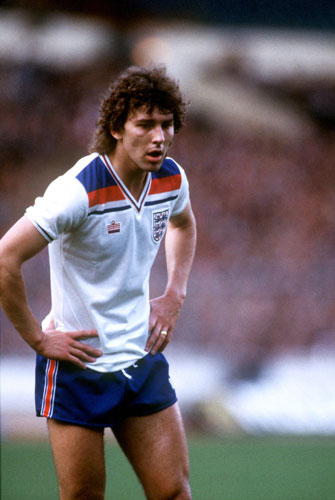
This belief in the entirely silly desire to believe something I do has an influence on my team reared its ugly head again recently. I bought a 1982 England Replica Shirt (i’m not old enough to remember 1982, I Just like the shirt) and wore it as England beat Mexico in a recent friendly. England then took on Japan, and as England were wearing Red, I put on my World Cup 2002 Red England shirt. England were losing at half time, so disgusted, I switched shirt to the 1982 Home shirt. England won 2-1.

So obviously, I’m going to wear that 1982 shirt until England lose again. For games where England play in Red, I’m going to switch to the current away shirt, in the hope that’ll be lucky.

I know it makes absolutely no sense. Obviously what shirt I wear has no influence on the game. My rational mind tells me this. And yet, when I’m watching I still follow these odd rituals when they come up (I’ve still never watched another game in the stand where I watched my club team lose those opening matches) and I can’t resist them – I don’t want to tempt fate and feel somehow responsible.

So, what I want to know is what you’ll be doing before your countries games. Is there a lucky shirt, or lucky socks, or a record you have to listen to before the game?


Can Bielsa’s Chile Accomplish what his Argentina Couldn’t in 2002?

Posted: 05 Jun 2010 01:18 AM PDT

1187174_FULL-LND

Marcelo Bielsa may never be forgiven by Argentina fans for crashing out of the 2002 World Cup in the first round.  His Argentine team were considered favorites after winning the CONMEBOL regional qualifiers, but couldn’t get past either England or Sweden in the group stage.  In hindsight, his tactics (once praised) were dubbed too inflexible, predictable and stifling to talented individual players who required freedom to display their talent.  The team showed up to the tournament exhausted, with many players struggling with injuries.  The conditioning and preparation for the tournament was brutal, appearing to overwork the players who were already fatigued from their club obligations.  For Bielsa, success is attained through hardwork, obsessive attention to detail and repetition- and each of his carefully designed coaching methods is based on this philosophy.  Though Bielsa left Argentina in 2004 (with an Olympic Gold medal), his methods and philosophy don’t appear to have changed in his tenure with the Chilean Federation.  Of course, the million dollar question is if Bielsa’s methods can help Chile pull off what an “invincible” Argentina side could not in 2002?

Chile vs. Argentina

Chile and Argentina share a lot of similarities:  they are both South American, share a the 3rd longest international border in the world and have extensive economic, military and diplomatic ties.  But, in terms of football- the two nations don’t share much.  The Argentines have been spoiled by their extensive history of success both at the international and club level- so extensive in fact, it required two posts for Daryl to recite it all.  Argentina are about to make their 20th total and 10th consecutive appearance at the World Cup finals.  This will only be Chile’s 8th time qualifying for the tournament in their history and they didn’t record a single win in four of their participating years.  Argentina reached four World Cup finals and won twice before Chile ever made it out of the group stage in a World Cup they weren’t hosting in 1998 (previously, they placed third as the tournament host in 1962).  The Argentinean squad is filled with star players like Messi, Aguero, Mascherano, Tevez, Higuain…the list goes on.  The Chileans are undoubtedly a talented group, but remain players on the cusp of greatness and fame…thus, largely unfamiliar to casual fans of the game.

Given, this pretty significant gap in the pool of talent and World Cup legacy- no one though Chile would be able to overcome their regional rivals.  Especially since at the time of the encounter, Chile had only won 5 of the last 77 matches between the two.  But Chile managed to pull off the shock win.  And they did it with class and style.  Argentina certainly didn’t play well that game – but that shouldn’t take anything away from the focused, disciplined performance by Chile.  I had a hard time finding full highlights, but here is a video of Chile’s game winning goal.

After losing to Chile, Argentina made drastic moves.  Perhaps missing some of Bielsa’s colorful habits and opinions, they fired Alfio Basile and hired Diego Maradona to lead Argentina to the World Cup. While Diego did little to steady the ship, Argentina eventually succeeded in qualifying for South Africa after enduring a very rocky campaign.  Chile, on the other hand, seemed to be inspired by the victory.  They followed up the win with subsequent wins over Peru, Paraguay, Bolivia, Colombia and Ecuador.  Even though they only managed a draw with Uruguay and lost badly to Brazil (4-2), Chile surprised everyone by qualifying as second behind Brazil in the CONMEBOL region.

Unorthodox Methods

To achieve this feat, Bielsa instituted some radical and unorthodox policies which are familiar from his days coaching the Argentina dream team.  Described as a “tortured intellectual,” he once told a player “While you are sleeping, I am thinking of ways for the team to win.”  He is obsessive to a fault with a clear strategic vision of what he wants his team to produce on the field.  It is said that he makes his teams watch endless hours of video and film (that he has personally edited) on the opposing team’s tactics to analyze, dissect and pick apart the flaws and cracks to exploit.  Plus the additional hours of footage of Chile’s own games.  For a description of his editing technique that is so obsessive it seems like Bielsa wrote it himself, see this Guardian article written on him in 2002.

Every decision he makes is based on his precise understanding of the game’s conditions- he is known to measure the length of the field to determine the team’s formation and to hold separate practices for each field position (strikers, midfield, defenders).  It’s not wonder why he is (affectionately) known as “Loco” Bielsa.

Though he has endeared himself to the Chilean public, he remains a cold figure that is fiercely protective of his private life- aloof to his players and the media alike.  His distaste for exclusive interviews is widely known- instead, he prefers to speak to journalists in public press conferences.  But critiques of being inaccessible are unfair as he is known to field every question in the room…even if that requires a 5 hour press conference.

But, can the results be different if the build-up is the same?

So despite having endured a terrible result in 2002, Bielsa has clearly remained loyal to the methods which initially led Argentina to their successful campaign to qualify for the Korea/Japan edition of the World Cup.  Last week, he even arranged for his team to participate in two friendlies…on the same day. The physical preparation for the Chilean team is rumored to be intense.  It has to be for the players to have the endurance to execute Bielsa’s high-energy, face paced attacking style (which also hasn’t changed much since he coached Argentina) over several matches in such a short period of time.

To be honest, I’m not sure.  Last week, Chile played three friendlies in one week- including the famous aforementioned two in one day.  To their credit, they won all of them (Northern Ireland, Israel and Zambia), but Bielsa wasn’t impressed with the quality of the opposition so he penciled in some additional, intense training sessions.  And this scheduled is a pared down form of their original calendar of friendlies, many of whom were cancelled due to the earthquake Chile sustained in February 2010.  His intense schedule of workouts may be a better fit for this Chilean team than his former Argentine groups- the lack of stars means that many of his player’s season were shorter and likely to be less intense.  However, there is still a fear that perhaps history is repeating itself and Bielsa’s team may have physically peaked too soon.  In the recent friendly against Israel, the team’s talisman, Humberto Suazo (picture below), picked up a hamstring injury that is expected to make him unavailable for three weeks.  Since the injury, some media outlets have suggested that the treatment Suazo is using to accelerate his body’s healing (platelet injections) may cause him to fail a drug test if too many injections are taken. For better or for worse, Chilean fans won’t have to wait long to see how their team cope with the physical stress and loss of their key striker.  Chile are set to face Honduras in their first World Cup group match on June 16th before they face Switzerland on the 21st and Spain on the 25th.

HumbertoSuazo_display_image


Saturday, June 5, 2010

World Cup 2010 Blog: “Soundoff: Your World Cup Group D Predictions…” plus 9 more

World Cup 2010 Blog: “Soundoff: Your World Cup Group D Predictions…” plus 9 more

Link to World Cup Soccer - South Africa 2010

Soundoff: Your World Cup Group D Predictions…

Posted: 04 Jun 2010 07:10 PM PDT

1143861_largeIt’s been called the Group of Death. I don’t buy it myself, because the whole concept of Death Groups is either silly, morbid or both. But I will admit that World Cup Group D looks tough. Tough to get out of and tough to predict.

The teams are as follows: Australia, Germany, Ghana, Serbia. I’d genuinely like to see all four of those teams progress, but unfortunately two will make it. My prediction for how Group D will finish is after the jump, please let me know yours in the comments.

There are no easy games in Group D. No minnows to run up the score against, and everyone will take points off each other. But Germany still has to be favourite. Even without the injured Michael Ballack (injured by Ghana’s Kevin Prince Boateng by the way) Germany are still a serious team who will expect to win the group. I’m not going to argue.

After that it’s pretty much a three way fight for second place. Much as I like them, I’m ruling Australia out first. They’re not a bad football team, but they still lack a really potent striker. Tim Cahill can’t do everything. So I see everyone getting a few points in Group D but Australia ultimately finishing last. Which leaves two more teams fighting for second place…

Serbia has plenty of talent, but their recent form has been has been pretty dreadful, including a surprise 1-0 loss to New Zealand. Which is why I’m backing Ghana to take second place. Even without Michael Essien. Because brilliant as The Bison is, Ghana are not a one man team. Ghana may be the youngest team in the tournament, but the majority of that youth is serious talent. Like 21 year old Udinese midfielder Kwadwo Asamoah for example.

Here are my final predicted standings:

1. Germany
2. Ghana
3. Serbia
4. Australia

Agree? Disagree? Am I giving Germany too much credit? Australia not enough? Share your Group D prediction in the comments.

- Looking for more prediction fun? Visit our Group A, B and C prediction posts, or enter our World Cup Bracket competition.


Daily Dose: June 4th, 2010 – China’s Insane Jabulani Goal vs France

Posted: 04 Jun 2010 06:10 PM PDT

So France lost 1-0 to China today. Which sounds bad. And is bad. But take a look at the goal from Deng Zhuoxiang that won it:

Either Deng is better than Pirlo/Juninho/Beckham combined, or every bad thing we’ve heard about the adidas Jabulani World Cup ball is true.


USA Offered Record Bonus to Win World Cup

Posted: 04 Jun 2010 05:10 PM PDT

many-dollars-dockRemember our Which World Cup Team Wants it the Most? post from earlier this week? Well it may need rewriting. Because news broke recently that the US national team is being offered a reported $20.6m should they win the World Cup in South Africa. Split 23 ways that’s $895,131 each. Quite the persuasive little prize pot.

Of course the players will say that win bonuses have nothing to do with anything, and that they want to win the World Cup because it’s worth winning. And not just because you can melt the trophy down and sell the gold afterwards. But still. Nearly $1 million per man is a lot of money for winning seven football matches. Especially for the guys that don’t play, and double especially for an MLS player like, say, Robbie Findley, who would have to work for more than a decade on his current salary to see that much money.

The $20.6m is apparently the biggest win bonus ever offered to a World Cup team. Or at least the biggest we’ve ever heard about. The number was apparently agreed as part of the new Collective Bargaining Agreement between MLS and the Players Union. How can US Soccer afford such a sum, you might ask? Donations from wealthy soccer moms maybe? Actually US Soccer is basically offering the USA players 80% of the $31m they would receive from a World Cup win, rather than re-investing that money into the sport. Which sounds like a terrible idea, except that if the USA wins World Cup 2010 then US Soccer will be well well ahead of schedule.

>> Supporting USA in the World Cup? Put on your USA jersey, get your USA World Cup tickets, and get to the stadium! If you're watching from home, keep up to date with USA World Cup Blog, and follow us on Twitter and Facebook.


The World Cup Ball History In Photos

Posted: 04 Jun 2010 04:10 PM PDT

1930_World_Cup_Final_Ball_Uruguay

The photo above is the Tiento, the official ball from the very first World Cup in Uruguay in 1930. Do you suppose the players might hush up about the Jabulani given this as the alternate option? Likely so.

Jens Heilmann is a photographer who decided to take photos of the balls from the previous 26 World Cups along with this year’s whipping boy of a ball with wonderful results – in decidedly better shape than the one above to boot. He says it took “years” to acquire all the balls, and you’d have to believe him.

The methods to his madness are detailed, and it’s an infinitely better viewing if you watch with the maturity of a 9 year old.


Dunga and Maradona Graffiti in Rio de Janeiro

Posted: 04 Jun 2010 02:40 PM PDT

Brazil Wcup Soccer


Photo: AP

One of my favourite things about the World Cup are the golden nuggets of knowledge you learn about each nation supports their team. In England right now it’s all flags of St. George either attached to cars or hanging out of bedroom windows, and people wearing football shirts that don’t flatter their physique. In Brazil there’s apparently a tradition of World Cup graffiti (at least that’s what the description accompanying this photo says) like the above bit of spray-paint showing caricatures of Brazil coach Dunga and Argentina coach Diego Maradona.

Is that a baby bottle in Maradona’s left hand? Also, is anyone else tempted to go to Rio with a cans of black and grey paint and update Maradona’s chin with a beard?


The No. 9s & 10s of the World Cup

Posted: 04 Jun 2010 01:10 PM PDT

85659285KT012_ARGENTINA_V_V

For some, the numbers are holy; for others, they are merely just a number. Much of it deals with history, when numbers were assigned based on field position, but the numbers themselves have taken on lives of their own. The No. 9, once reserved for the center forward, is still such, but more to the point is the bomber, the poacher – the man whose job is to put the crooked numbers on the scoreboard.

The fibers of the No. 10, however, are deified; sewn by Jesus with thread made of unicorn hair, the 10 is often given to the playmaker, the most influential player. In short: the talisman.

Below are all who will wear the hallowed shirts in the 2010 World Cup.


Group A

France:
No. 9: Djibril Cisse
No. 10: Sidney Govou

Mexico:
No. 9: Guillermo Franco
No. 10: Cuauhtemoc Blanco

South Africa:
No. 9: Katlego Mphela
No. 10: Steven Pienaar

Uruguay:
No. 9: Luis Suarez
No. 10: Diego Forlan

Group B

Argentina:
No. 9: Gonzalo Higuain
No. 10: Lionel Messi

Greece:
No. 9: Angelo Charisteas
No. 10: Giorgos Karagounis

Nigeria:
No. 9: Obafemi Martins
No. 10: John Obi Mikel

South Korea:
No. 9: Ahn Jung-Hwan
No. 10: Park Chu-Young

Group C

Algeria:
No. 9: Abdelkader Ghezzal
No. 10: Rafik Saifi

England:
No. 9: Peter Crouch
No. 10: Wayne Rooney

Slovenia:
No. 9: Zlatan Ljubijankic
No. 10: Valter Birsa

USA:
No. 9: Herculez Gomez
No. 10: Landon Donovan

Group D

Australia:
No. 9: Josh Kennedy
No. 10: Harry Kewell

Germany:
No. 9: Stefan Kiessling
No. 10: Lukas Podolski

Ghana:
No. 9: Derek Boateng
No. 10: Stephen Appiah

Serbia:
No. 9: Marko Pantelic
No. 10: Dejan Stankovic

Group E

Cameroon:
No. 9: Samuel Eto’o
No. 10: Achille Emana

Denmark:
No. 9: Jon Dahl Tomasson
No. 10: Martin Jorgensen

Japan:
No. 9: Shinji Okazaki
No. 10: Shunsuke Nakamura

Netherlands:
No. 9: Robin van Persie
No. 10: Wesley Sneijder

Group F

Italy:
No. 9: Vincenzo Iaquinta
No. 10: Antonio Di Natale

New Zealand:
No. 9: Shane Smeltz
No. 10: Chris Killen

Paraguay:
No. 9: Roque Santa Cruz
No. 10: Edgar Benitez

Slovakia:
No. 9: Stanislav Sestak
No. 10: Marek Sapara

Group G

Brazil:
No. 9: Luis Fabiano
No. 10: Kaka

Ivory Coast:
No. 9: Cheick Tiote
No. 10: Gervinho

North Korea:
No. 9: Ri Chol-Myong
No. 10: Hong Yong-Jo

Portugal:
No. 9: Liedson
No. 10: Danny

Group H

Chile:
No. 9: Humberto Suazo
No. 10: Jorge Valdivia

Honduras:
No. 9: Carlos Pavon
No. 10: Julio Cesar de Leon

Spain:
No. 9: Fernando Torres
No. 10: Cesc

Switzerland:
No. 9: Alexander Frei
No. 10: Blaise Nkofu

All squad numbers are now officially up at FIFA.com.


The World Cup Dive Team XI

Posted: 04 Jun 2010 11:40 AM PDT

ronaldodiving

For all the wonderment of the World Cup, there will be scandal – and not of the FIFA variety (though perhaps that too). No, the players will be involved, and they shall dive. Oh they shall dive: with grace, with flair and with complete lack of self-respect. So below we have compiled the World Cup dive team, just like diving: no rules, just bad taste.

Poetically, it’s a 4-1-3-2, thus a little top heavy and imbalanced.

No kiddin’, eh?

First off, the important part: this is how you can spot a dive from the comforts of your living room couch, you simulation sleuths.

A four-point referees' guide to "diving" was unveiled by British psychologist Dr. Paul Morris, detailing how players make a spectacle of themselves to win a penalty or earn an opponent a yellow or red card.
The main obvious signs are:
– Clutching their body where they have not been hit;
– Taking an extra roll when they hit the ground;
– Taking fully controlled strides after being tackled before falling;
– Holding up both arms in the air, with open palms, chest thrust out, legs bent at the knee in an "archer's bow" position.

For examples, enjoy our tutorial with very special guest speakers from last year.

Now without further ado, the floaties-wearin’, speedo-snappin’, diving board-livin’, everything-shavin’ World Cup Dive Team …

Iker Casillas
Dani Alves, Lucio, Sergio Busquets, Ashley Cole
Steven Gerrard
Luis Suarez, Kun Aguero, Cristiano Ronaldo (Captain)
Alberto Gilardino, Robin van Persie.

(These are just examples – many, many more have yet to make YouTube.)

Hundreds, maybe even thousands, deserving of a spot on the team have been left off, but alas, tis a part of the game nowadays.

But if any aspiring World Cup participants in the crowd would like to take the quick n’easy route to the world’s grandest gala, here’s the charlatan’s manual (no paper):


Rio Ferdinand Injured, England Running Out of Captains

Posted: 04 Jun 2010 10:40 AM PDT

t1largThe injury news just keeps on coming. Didier Drogba’s fractured forearm means his participation in South Africa 2010 lies somewhere between unlikely and none. Now it seems that England captain Rio Ferdinand could miss out too after he injured his knee in a training session. Not just a little twist or a tweak, but something bad enough that Ferdinand left hospital on crutches today. Apparently all signs point to ligament damage. Which almost certainly means no World Cup for Rio.

For the record, nothing is confirmed at time of writing. But apparently Michael Dawson (the Spurs defender cut from the final England squad on June 1st) has been told to pack his bags and start looking for flights to South Africa.

This isn’t really a huge shock, since Ferdinand has had injury problems all season long with Man Utd. England’s other centre back options are Ledley King (who famously has his own knee problems, Matty Upson and Jamie Carragher, plus Dawson if and when he’s added to the squad). But maybe the bigger blow for England is that they’ve lost another captain.

John Terry was famously stripped of the England armband for (do we still need to say allegedly?) bumping uglies with the mother of ex-teammate Wayne Bridge’s children. But let’s not reopen that can of England worms again. Ferdinand was the replacement, stepping up from vice captain. Now if Ferdinand’s out then Steven Gerrard – many English fans first choice as England captain when Fabio Capello took over in 2008 – will be promoted. I’m not 100% sure who the new vice captain will be, but I think it’s Wayne Rooney.

USA fans may be pleased to hear the news about Ferdinand’s injury ahead of the England vs USA game on June 12th, but maybe less so when they hear that Jozy Altidore has sprained his right ankle. Likewise Italy fans will be worried to hear about Andrea Pirlo’s calf injury, and Brazil fans will be concerned by Julio Cesar’s back problems.

Is anyone at World Cup 2010 not injured? Maybe we should all start polishing our football boots and doing a few shuttle runs, and then see if there’s any room on that plane with Michael Dawson.

- More on the England story at England World Cup Blog.
- Need a new England jersey if Ferdinand goes home? Find it in our store.


Didier Drogba Very Probably Out of World Cup 2010

Posted: 04 Jun 2010 09:07 AM PDT

drogbaBad bad news today people. Cote d’Ivoire captain Didier Drogba fractured his right forearm arm during a 2-0 friendly win over Japan in Switzerland today. Drogba is undergoing tests to see just how bad thing are, but with only 11 days until Cote d’Ivoire’s World Cup opener vs Portugal, things do not look good. The injury was sustained after an aerial challenge with Japan defender Marcus Tulio Tanaka, which didn’t look malicious.

According to Cote d’Ivoire defender Kolo Toure, Drogba thinks his World Cup is over. "For him, he said, the World Cup is finished," Toure said. "We can just see on his face that he was sad, and when he is like that you can’t ask more," Toure said. "It is difficult for us because he is such a really important player."

However… brilliant striker that Didier Drogba is, he’s not a doctor. So this isn’t 100% yet.

Cote d’Ivoire coach Sven-Goran Eriksson is refusing to rule Drogba out, with the Associated Press quoting him thus:

"We are not sure yet," Eriksson said, saying Drogba’s participation was "still a possibility."

My guess is that given Drogba’s monumental importance to Cote d’Ivoire, and given Sven’s track record of crossing his fingers when players get injured (remember as England manager he took an injured Wayne Rooney and an injured Michael Owen to the 2006 World Cup, with only Peter Crouch as backup) that Drogba will not be replaced in the squad, and will be given every chance to get fit.

It’s surely a long shot at this point though, and so terrible news for Cote d’Ivoire. But it’s also bad news for the tournament. One of the most exciting things about South Africa hosting the World Cup was the prospect of seeing the superstar African footballers playing close to home. Michael Essien is already out, and now probably Didier Drogba. Will someone please bubble-wrap Samuel Eto’o?

- I don’t normally like posting video of injuries, because inviting readers to watch a man get his body broken seems a cheap and nasty way of getting pageviews. However, the below video of Drogba’s isn’t particularly gruesome, and is of interest, so click play if you want to see how it happened:

[via Daily Telegraph]


Dunga Takes On FIFA

Posted: 04 Jun 2010 07:40 AM PDT

carlos_dungaThere’s something that doesn’t sit quite right with all the criticism over Dunga. I’ve never been a fan, he never played for a team I’ve rooted for – hell, his team even made me cry when I was ten – but I still can’t help but feel the criticism towards him is entirely unwarranted. All the guy does is win – often convincingly, and without controversy.

So when he began to take on FIFA over the new ball, he might’ve become my favorite coach at the World Cup aside from that Paul Newman impersonator patrolling the Italian sidelines.

Watching my first game with the new ball yesterday, Italy v Mexico, I could see what the world was talking about without ever having felt one in my hands – it looked like a Whiffle ball. It looked plastic, hard and like it cost $4.99 with a large Slurpee at the local 7-11. Claudio Marchisio hit one ball with his right foot that at its zenith turned into the final shot in an early 90’s McDonald’s commercial with Michael Jordan and Larry Bird.

The Selecao’s flattop feels similary, and when FIFA mouth Jerome Valcke gave it back to him, Dunga retorted with the football coach’s version of “you wanna take this outside?”.

“All he (Valcke) has to do is play,” Dunga told reporters. “If he plays he will have a different opinion.

“The guy has never gone on the pitch, never kicked a ball, the only thing he knows how to do is talk.

“Let’s put him on the field to play, to come and train here with us, with this ball, and afterwards we can talk.”

To be honest, I’d prefer they settled this the old school way: “you wanna take this outside?”.

Another battle Dunga would win convincingly despite the criticism and plastic balls of FIFA.